
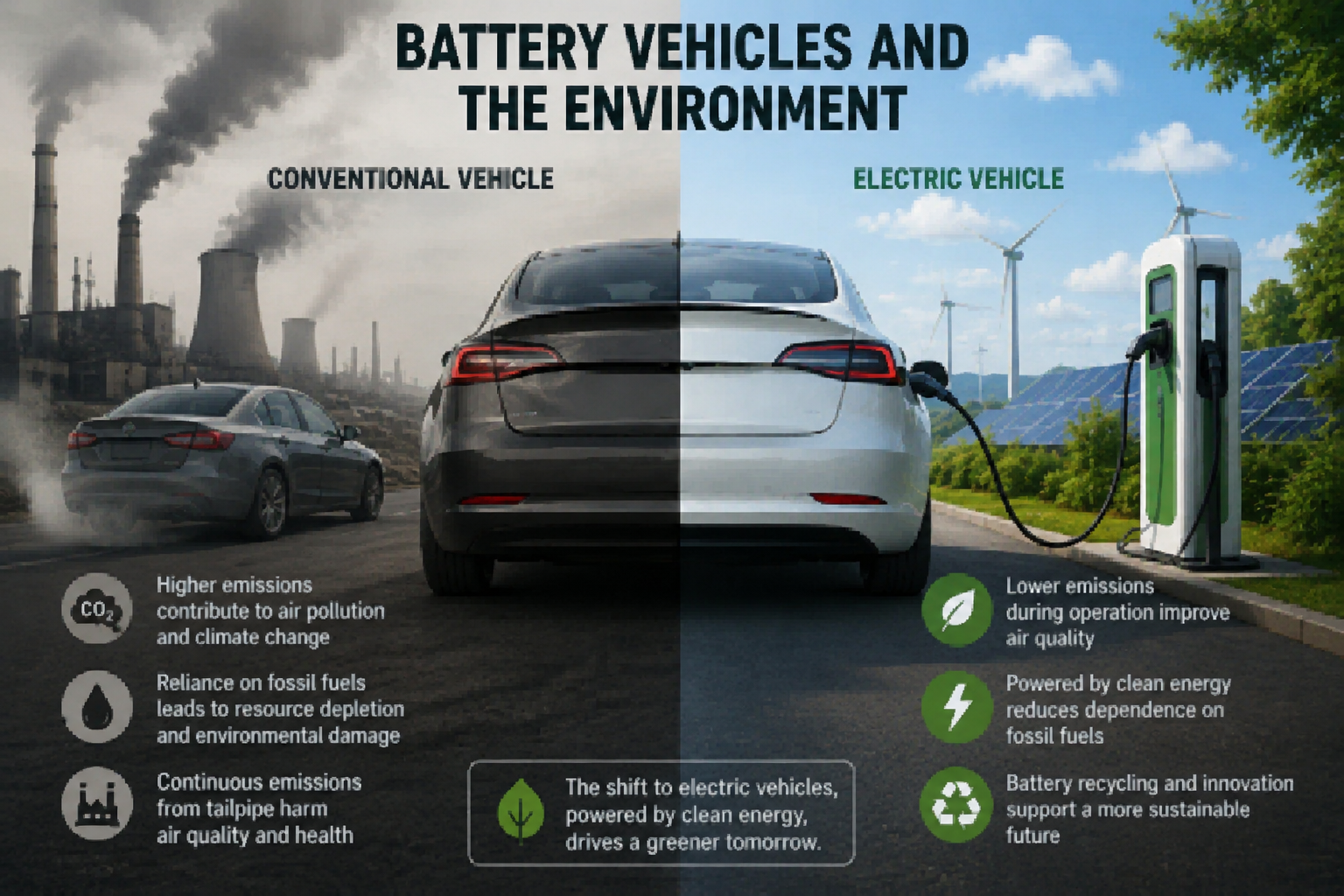
Electric vehicles (EVs) are often promoted as the future of sustainable transportation. Governments, automakers, and environmental advocates view them as a key solution to reducing greenhouse gas emissions and combating climate change. However, a growing debate questions whether battery-powered vehicles are as environmentally friendly as they appear.
The answer is more nuanced than a simple yes or no. While EVs significantly reduce emissions during operation, their overall environmental impact depends on factors such as battery production, electricity sources, mining practices, and end-of-life recycling.
The Hidden Environmental Cost of Batteries
The most controversial aspect of electric vehicles is battery manufacturing. Lithium-ion batteries require materials such as lithium, cobalt, nickel, and graphite. Extracting these minerals often involves energy-intensive mining operations that can lead to habitat destruction, water depletion, and environmental degradation.
For example, lithium extraction in arid regions can consume large amounts of water, potentially affecting local ecosystems and communities. Cobalt mining has also raised concerns regarding environmental management and labor conditions in some producing regions.
As a result, manufacturing an EV typically generates more carbon emissions than producing a conventional gasoline-powered vehicle.
Lower Emissions During Use
Despite the higher manufacturing footprint, electric vehicles generally produce significantly lower emissions during their operational life. Unlike internal combustion engine vehicles, EVs do not emit exhaust gases such as carbon dioxide, nitrogen oxides, or particulate matter while driving.
This contributes to improved urban air quality and reduced greenhouse gas emissions, particularly in regions where electricity is generated from renewable sources such as solar, wind, or hydropower.
Studies consistently show that over their lifetime, most electric vehicles produce fewer total emissions than comparable gasoline or diesel vehicles.
The Electricity Factor
The environmental advantage of EVs largely depends on how the electricity used to charge them is generated.
In countries heavily reliant on coal-fired power plants, charging an electric vehicle may indirectly result in significant emissions. However, even in many coal-dependent regions, EVs often remain more efficient than traditional vehicles because electric motors convert energy more effectively than internal combustion engines.
As national power grids increasingly incorporate renewable energy, the environmental performance of electric vehicles improves further.
Battery Recycling and the Circular Economy
One of the biggest challenges facing the EV industry is battery disposal and recycling.
If batteries are not properly managed at the end of their life cycle, they can become a source of environmental contamination. Fortunately, advances in recycling technologies are making it possible to recover valuable materials such as lithium, nickel, and cobalt for reuse in new batteries.
A robust battery recycling ecosystem could significantly reduce future mining demand and improve the sustainability of electric mobility.
Comparing EVs and Conventional Vehicles
When evaluating environmental impact, it is important to consider the entire life cycle of a vehicle rather than focusing solely on manufacturing or usage.
Traditional gasoline and diesel vehicles continuously emit greenhouse gases throughout their lifespan. They also require ongoing extraction, transportation, and refining of fossil fuels, all of which contribute to environmental degradation.
Electric vehicles, while carrying a higher initial environmental cost due to battery production, generally offset that impact over years of operation through lower emissions and greater energy efficiency.
The Road Ahead
Electric vehicles are not a perfect environmental solution. Battery production, resource extraction, and recycling challenges remain significant concerns. However, evidence suggests that they offer a meaningful pathway toward reducing transportation-related emissions when combined with cleaner energy generation and improved battery technologies.
The future of sustainable mobility will likely depend not only on electric vehicles but also on renewable energy expansion, public transportation improvements, battery recycling innovations, and responsible resource management.
Rather than viewing EVs as entirely green or environmentally harmful, it is more accurate to see them as an important step in a broader transition toward a cleaner and more sustainable transportation ecosystem.
Battery electric vehicles do impact the environment, particularly during manufacturing and raw material extraction. However, over their lifetime, they generally produce fewer emissions and contribute less to air pollution than conventional vehicles. The true environmental benefits of EVs will continue to grow as renewable energy adoption increases and battery technologies become more sustainable.
The question is not whether EVs have an environmental impact—they do. The real question is whether they offer a better alternative to fossil-fuel-powered transportation, and current evidence suggests that in most cases, they do.