
Russia has rehearsed its ability to deliver a “massive” nuclear strike, the Kremlin says.
The military exercise involved delivering a “response to an enemy nuclear strike”, Defence Minister Sergei Shoigu said.
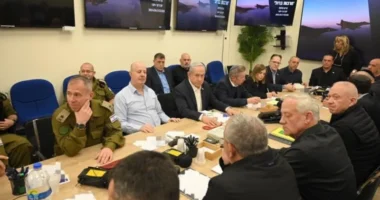
State TV showed him recounting the rehearsal to President Vladimir Putin.
It comes as Russia’s parliament backed the withdrawal of Moscow’s ratification of a global treaty that bans all physical testing of nuclear warheads.
Russia and the United States conduct regular nuclear readiness simulations – Moscow has traditionally held its own towards the end of October.
The exercises this year involved “delivering a massive nuclear strike by strategic offensive forces in response to an enemy nuclear strike”, Mr Shoigu reported to President Putin.
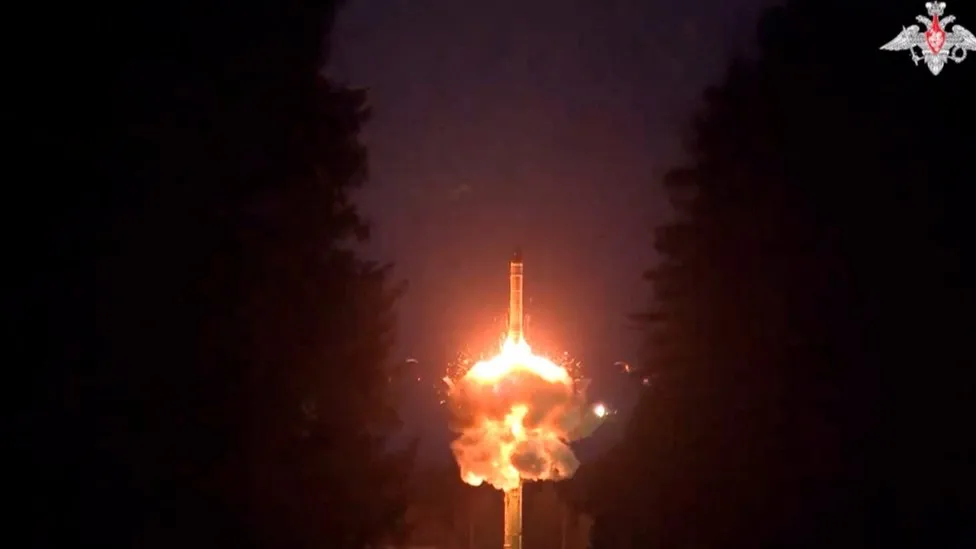
A Kremlin statement said that “practical launches of ballistic and cruise missiles” had taken place.
A Yars intercontinental ballistic missile was fired from a test site in Russia’s far-east, and another missile was fired from a nuclear-powered submarine in the Barents Sea, the statement said.
The defence ministry released footage of the tests.
Earlier this month, Mr Putin said Russia had held a “final successful test” of a nuclear-powered cruise missile.
The experimental weapon, first announced in 2018, was hailed as having a potentially unlimited range, but President Putin’s account has not been independently confirmed.
The latest tests will be seen as a display of force which coincides with Moscow de-ratifying an international nuclear test ban treaty.
Parliament completed the passage of a law that withdraws Russia’s ratification of the treaty on Wednesday.
Mr Putin called upon ministers to back the change to reflect the position of the United States, which signed but never ratified the Comprehensive Nuclear Test Ban Treaty (CTBT).
The CTBT, agreed in 1996, bans “any nuclear weapon test explosion or any other nuclear explosion” anywhere in the world.
Russia waged a full-scale invasion in Ukraine in February last year, raising concerns over nuclear war.
In June, Russia stationed a first batch of tactical nuclear weapons in Belarus. Mr Putin told a forum they would only be used if Russia’s territory or state was threatened.
The US government says there is no indication the Kremlin plans to use nuclear weapons to attack Ukraine.