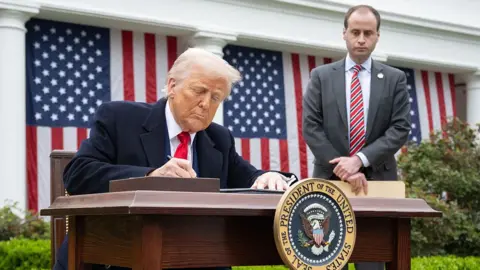
US President Donald Trump announced a sweeping new set of tariffs on Wednesday, arguing that they would allow the United States to economically flourish.
These new import taxes, which Trump imposed via executive order, are expected to send economic shockwaves around the world.
But the US president believes they are necessary to address trading imbalances and to protect American jobs and manufacturing.
Here are the basic elements of the plan.
10% baseline tariff
In a background call before Trump’s speech, a senior White House official told reporters that the president would impose a “baseline” tariff on all imports to the US.
That rate is set at 10% and will go into effect on 5 April.
It is the companies that bring the foreign goods into the US that have to pay the tax to the government, although this could have knock-on effects to consumers.
Some countries will only face the base rate. These include:
- United Kingdom
- Singapore
- Brazil
- Australia
- New Zealand
- Turkey
- Colombia
- Argentina
- El Salvador
- United Arab Emirates
- Saudi Arabia
Custom tariffs for ‘worst offenders’
White House officials also said that they would impose what they describe as specific reciprocal tariffs on roughly 60 of the “worst offenders”.
These will go into effect on 9 April.
Trump’s officials say these countries charge higher tariffs on US goods, impose “non-tariff” barriers to US trade or have otherwise acted in ways they feel undermine American economic goals.
The key trading partners subject to these customised tariff rates include:
- European Union: 20%
- China: 54%
- Vietnam: 46%
- Thailand: 36%
- Japan: 24%
- Cambodia: 49%
- South Africa: 30%
- Taiwan: 32%
Advertisement
No additional tariffs on Canada and Mexico
The 10% baseline rate does not apply to Canada and Mexico, since they have already been targeted during Trump’s presidency.
The White House said it would deal with both countries using a framework set out in Trump’s previous executive orders, which imposed tariffs on both countries as part of the administration’s efforts to address the entry of fentanyl to the US and border issues.
Trump previously set those tariffs at 25% on all goods entering from both countries, before announcing some exemptions and delays.
25% tariffs on car imports
In addition, the president confirmed the beginning of a new American “25% tariff on all foreign made-automobiles”.
This tariff went into effect almost immediately, at midnight local time.