Canada says it will impose a 100% tariff on imports of China-made electric vehicles (EV) after similar announcements by the US and European Union.
The country also plans to impose a 25% duty on Chinese steel and aluminium.
Canada and its Western allies accuse China of subsidising its EV industry, giving its car makers an unfair advantage.
China has called the move “trade protectionism” which “violates World Trade Organization rules”.
“We are transforming Canada’s automotive sector to be a global leader in building the vehicles of tomorrow, but actors like China have chosen to give themselves an unfair advantage in the global marketplace”, said Canadian Prime Minister Justin Trudeau.
Canada’s duties on Chinese EVs are due to come into effect on 1 October, while those on steel and aluminium will be implemented from 15 October.
“The rapid development of China’s electric vehicle industry is a result of persistent technological innovation, well-established industrial and supply chains, and full market competition,” said a statement from China’s embassy in Canada.
“Its competitiveness is gained through utilising its comparative advantages and following market principles, rather than relying on government subsidies.”
China is Canada’s second-largest trading partner, behind the US.
In May, the US said it would quadruple its tariffs on imports of Chinese EVs to 100%.
That was followed by the EU, which announced plans to impose duties on China-made EVs of up to 36.3%.
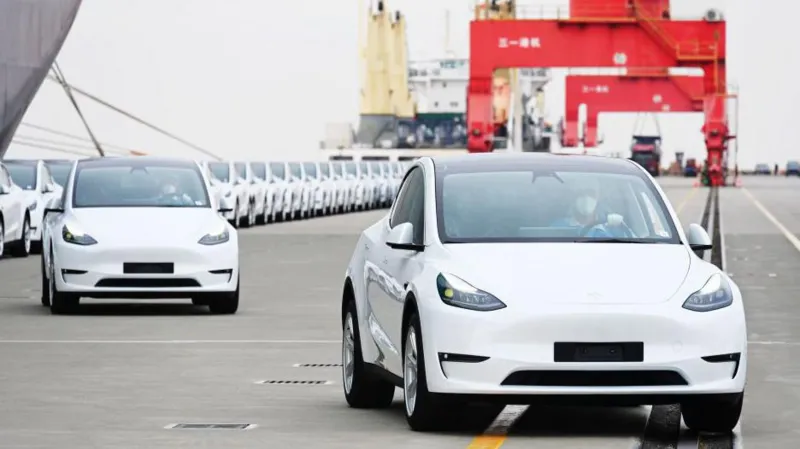
Canada’s tariffs on Chinese EVs will include those made by Tesla at its Shanghai factory.
“Tesla will almost certainly be lobbying the Canadian government to get some leeway on these tariffs, as they have already with Europe,” said Mark Rainford, a China-based car industry commentator.
“If they fail at mitigating the tariff enough, they’ll likely look at switching their Canadian imports to either the US or European factories since Canada is their 6th largest market this year and thus not insignificant.”
Tesla did not immediately reply to a request for comment from BBC News.
Earlier this month, the EU cut its planned extra tariff on China-made Teslas by more than half, after further investigations requested by Elon Musk’s car maker.
Chinese car brands are still not a common sight in Canada but some, like BYD, have taken steps to enter the country’s market.
China is the world’s largest manufacturer of EVs and its car makers have quickly gained a significant share of the global market.
Meanwhile, Canada has struck deals worth billions of dollars with major European car makers, as it tries to become a key part of the global EV industry.