China’s economy has beaten expectations even as US President Donald Trump’s tariffs and a prolonged crisis in the property market weigh on growth.
Official figures show the world’s second largest economy grew by 5.2% in the three months to the end of June, compared to the same time last year. That’s better than the 5.1% forecast by many economists but lower than the previous quarter.
The country has so far avoided a sharp downturn, partly due to measures announced by Beijing to help support the economy and a fragile trade truce with Washington.
The economy “withstood pressure and made steady improvement despite challenges”, said China’s National Bureau of Statistics in a statement.
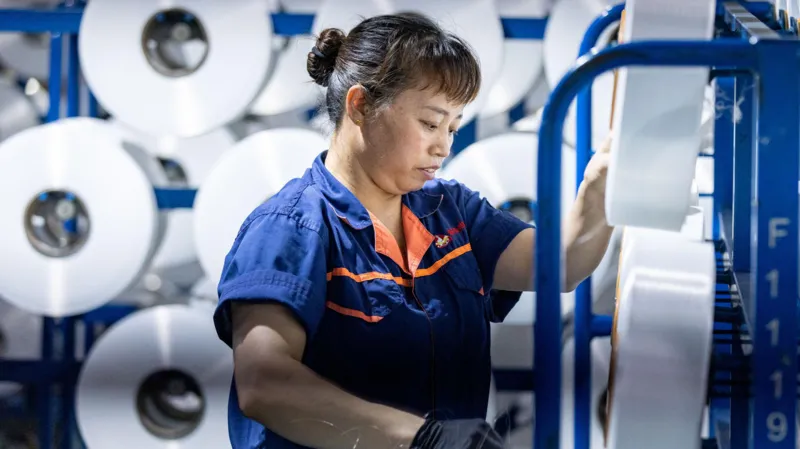
Officials said economic growth was helped by a 6.4% expansion in manufacturing, with higher demand for 3D printing devices, electric vehicles and industrial robots.
The country’s services sector – which includes areas like transport, finance, and technology – also made gains.
But in June, retail sales growth slowed to 4.8% from a year earlier, compared with a 6.4% increase in May.
Also on Tuesday, official figures showed a drop in China’s new home prices in June, falling at the fastest monthly pace in eight months.
The data suggests the country’s real estate industry is continuing to struggle despite several rounds of measures to support property prices.
Analysts had expected a bigger impact from tariffs on China’s economy but the country remains “highly resilient”, said economist Gu Qingyang from the National University of Singapore.
Growth was boosted by exports, mainly due to firms rushing to ship goods before potential new tariffs or changes to China’s export strategy take effect, he added.
The second half of the year is likely be more uncertain though, Prof Gu said.
“As a result, stronger government stimulus might be needed. That said, achieving the 5% annual growth target still seems well within reach.”
But some economists expect China to miss its “around 5%” annual growth target this year.
“The real question is by how much. We believe it will defend a floor of 4%, which remains the minimum politically acceptable level,” Dan Wang, director for China at consultancy Eurasia Group told the BBC.
A tariffs war between China’s President Xi Jinping and Trump led to the US imposing a 145% levy on Chinese imports. In return, Beijing introduced a 125% duty on some US goods.
Those tariffs were paused after negotiations in Geneva and London. The two sides now have until 12 August to reach a long-term trade deal.
Washington has also hit countries with close economic ties to China with heavy levies.