
Why Today’s Global Challenges Demand More Than Short-Term Politics
The defining challenge of current affairs is no longer simply how governments respond to individual crises. It is whether leaders can build institutions, economies, and partnerships capable of navigating a world changing faster than traditional policymaking.
From geopolitical tensions and economic uncertainty to artificial intelligence, climate pressures, technological competition, and shifting global alliances, today’s leaders are operating in an environment where decisions made now can shape the next decade.
Leadership Beyond Headlines
Political developments often dominate the news cycle, but effective leadership requires looking beyond immediate headlines.
Economic resilience, technological capability, energy security, food security, cybersecurity, and access to education are increasingly interconnected. A disruption in one area can quickly affect others.
For governments and business leaders, this means that short-term reaction must be balanced with long-term strategy.
Artificial Intelligence Is Becoming a Leadership Issue
Artificial intelligence is moving rapidly from a technology discussion to a national and corporate leadership priority.
Countries are competing to develop AI infrastructure, research capabilities, semiconductor ecosystems, skilled talent, and responsible regulatory frameworks. Businesses are simultaneously confronting questions about productivity, employment, competitiveness, data governance, and ethical use.
The leaders who succeed will not necessarily be those who simply adopt the newest technology. They will be those who understand where technology creates genuine value and how it should be governed responsibly.
A More Fragmented Global Economy
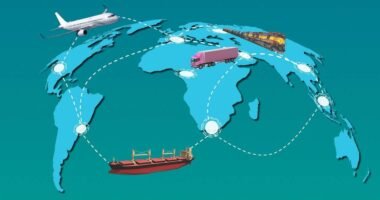
Globalization is also entering a new phase. Supply-chain diversification, strategic manufacturing, energy independence, trade policies, and competition over critical technologies are influencing economic decisions around the world.
For developing economies, this creates both risks and opportunities.
Countries that can combine infrastructure development with skilled human capital, innovation, digital transformation, and stable institutions may attract greater investment and become important participants in emerging global supply chains.
The Human Dimension
Behind every geopolitical and economic statistic are people.
Rising living costs, employment uncertainty, unequal access to opportunity, migration, education, and public trust remain central leadership challenges. Economic growth has limited meaning if its benefits do not translate into improved opportunities and living standards.
This is why leadership today must be measured not only by GDP, investment figures, or technological achievements, but also by how effectively societies create opportunity and resilience for ordinary citizens.
India’s Opportunity
For India, the changing global environment presents a significant opportunity.
Its large domestic market, expanding digital economy, technology talent, manufacturing ambitions, and growing international role give it the potential to play a larger part in the emerging global order.
But opportunity alone is not enough. Sustained progress will depend on strengthening education and skills, encouraging innovation, improving infrastructure, supporting entrepreneurship, and ensuring that technological progress reaches communities beyond major urban centers.
The Leaders’ View
The central question for today’s leaders is therefore not simply:
“What is happening today?”
It is:
“What will today’s decisions mean five or ten years from now?”
Current affairs should not be viewed merely as a collection of crises and political developments. They are signals of larger structural changes taking place across society, economics, technology, and international relations.
The next generation of leaders will be judged by their ability to recognize those changes early, make difficult decisions responsibly, and transform uncertainty into opportunity.
Leadership in the current era is ultimately about preparing for the future while solving the problems of today.