For decades, the insurance industry was perceived as one of the most conservative sectors in the global economy. Lengthy paperwork, traditional underwriting, and slow claims processing defined customer experiences. Today, that perception is rapidly changing.
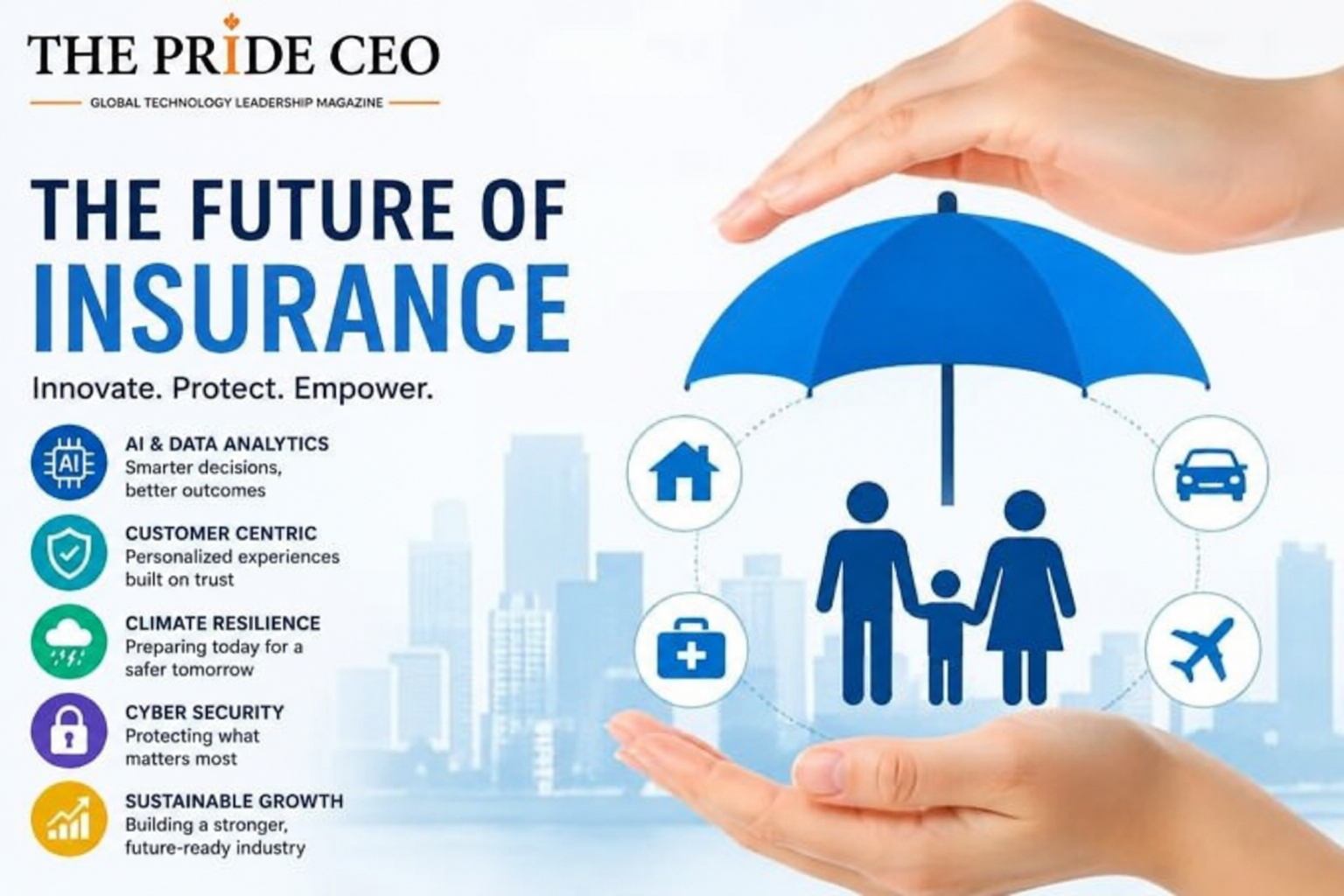
Artificial intelligence, digital ecosystems, climate challenges, cybersecurity threats, and changing customer expectations are transforming insurance from a reactive financial product into a proactive risk management platform. Insurance companies are no longer just paying claims—they are predicting risks, preventing losses, and delivering highly personalized services.
As businesses and consumers become increasingly digital, the global insurance industry is entering one of the most significant transformation phases in its history.
AI Is Becoming the Brain of Modern Insurance
Artificial Intelligence has moved beyond experimentation and is becoming a core operational capability for insurers.
Today’s leading insurers are using AI to:
- Accelerate policy underwriting
- Detect fraudulent claims within minutes
- Assess customer risk more accurately
- Automate document verification
- Improve customer support using intelligent virtual assistants
- Deliver personalized policy recommendations
Rather than replacing insurance professionals, AI is enabling them to make faster and better-informed decisions while improving customer satisfaction. Industry analysts expect AI adoption to continue expanding across underwriting, claims, pricing, and customer engagement throughout 2026.
Embedded Insurance Is Changing How Customers Buy Protection
Insurance is no longer purchased only through agents or insurance websites.
A rapidly growing trend known as Embedded Insurance allows customers to buy protection while purchasing another product or service.
Examples include:
- Travel insurance during flight booking
- Device protection while purchasing smartphones
- Health insurance integrated into wellness platforms
- Vehicle insurance during automobile purchases
- Business insurance bundled with digital financial services
Customers appreciate convenience, while insurers gain access to entirely new distribution channels. Embedded insurance is expected to become one of the industry’s fastest-growing business models over the next several years.
Climate Change Is Redefining Risk
Extreme weather events are becoming more frequent across the globe.
Floods, hurricanes, wildfires, droughts, and severe storms are creating unprecedented financial losses for insurers. Traditional actuarial models based solely on historical data are becoming less effective as climate patterns continue to evolve.
Insurance companies are now investing heavily in:
- Predictive climate analytics
- Satellite imagery
- Geographic risk modeling
- Real-time environmental monitoring
- Advanced catastrophe forecasting
Climate resilience is no longer just an environmental concern—it has become a strategic business priority for insurers worldwide.
Cyber Insurance Is Becoming a Business Necessity
As organizations become increasingly digital, cyberattacks have evolved into one of the largest financial risks facing businesses.
Ransomware attacks, phishing campaigns, AI-powered fraud, and data breaches have significantly increased demand for cyber insurance.
Modern cyber insurance policies now extend beyond financial compensation by providing:
- Incident response support
- Digital forensics
- Legal assistance
- Business interruption coverage
- Reputation management
- Recovery planning
However, insurers are also tightening underwriting standards, requiring organizations to demonstrate stronger cybersecurity practices before providing comprehensive coverage.
Customer Experience Has Become the New Competitive Advantage
Modern customers expect insurance services to operate with the same simplicity as digital banking or e-commerce.
Leading insurers are investing in:
- Mobile-first applications
- Instant claims processing
- Paperless onboarding
- Self-service customer portals
- Personalized digital experiences
- Omnichannel communication
Digital convenience is no longer optional—it has become a key differentiator in customer acquisition and retention.
Data Is the New Currency of Insurance
Insurance companies possess enormous volumes of customer, financial, medical, and behavioral data.
When managed responsibly, this information enables:
- More accurate pricing
- Personalized premiums
- Early fraud detection
- Preventive healthcare recommendations
- Better customer segmentation
- Improved operational efficiency
At the same time, insurers must maintain the highest standards of privacy, cybersecurity, and regulatory compliance to preserve customer trust.
Trust Will Remain the Industry’s Greatest Asset
Technology may automate underwriting, simplify claims, and personalize customer experiences, but insurance will always be built on one fundamental principle: trust.
Customers purchase insurance with the expectation that it will protect them during life’s most uncertain moments.
As artificial intelligence, automation, and digital platforms continue to reshape the sector, insurers must ensure that innovation enhances transparency, fairness, and customer confidence rather than replacing human empathy.
Organizations that successfully combine advanced technology with ethical governance, personalized service, and long-term customer relationships will define the next generation of insurance leadership.
The insurance industry is no longer simply about transferring financial risk—it is becoming a technology-driven ecosystem focused on predicting, preventing, and managing uncertainty.
Artificial intelligence, embedded insurance, cybersecurity, climate resilience, and digital customer experiences are setting new standards for insurers worldwide. Companies that embrace these innovations while maintaining trust and regulatory excellence will be best positioned to lead in an increasingly complex global economy.
As the world faces evolving economic, environmental, and technological challenges, the future of insurance belongs to organizations that move beyond policies and premiums to become trusted partners in resilience and long-term value creation.