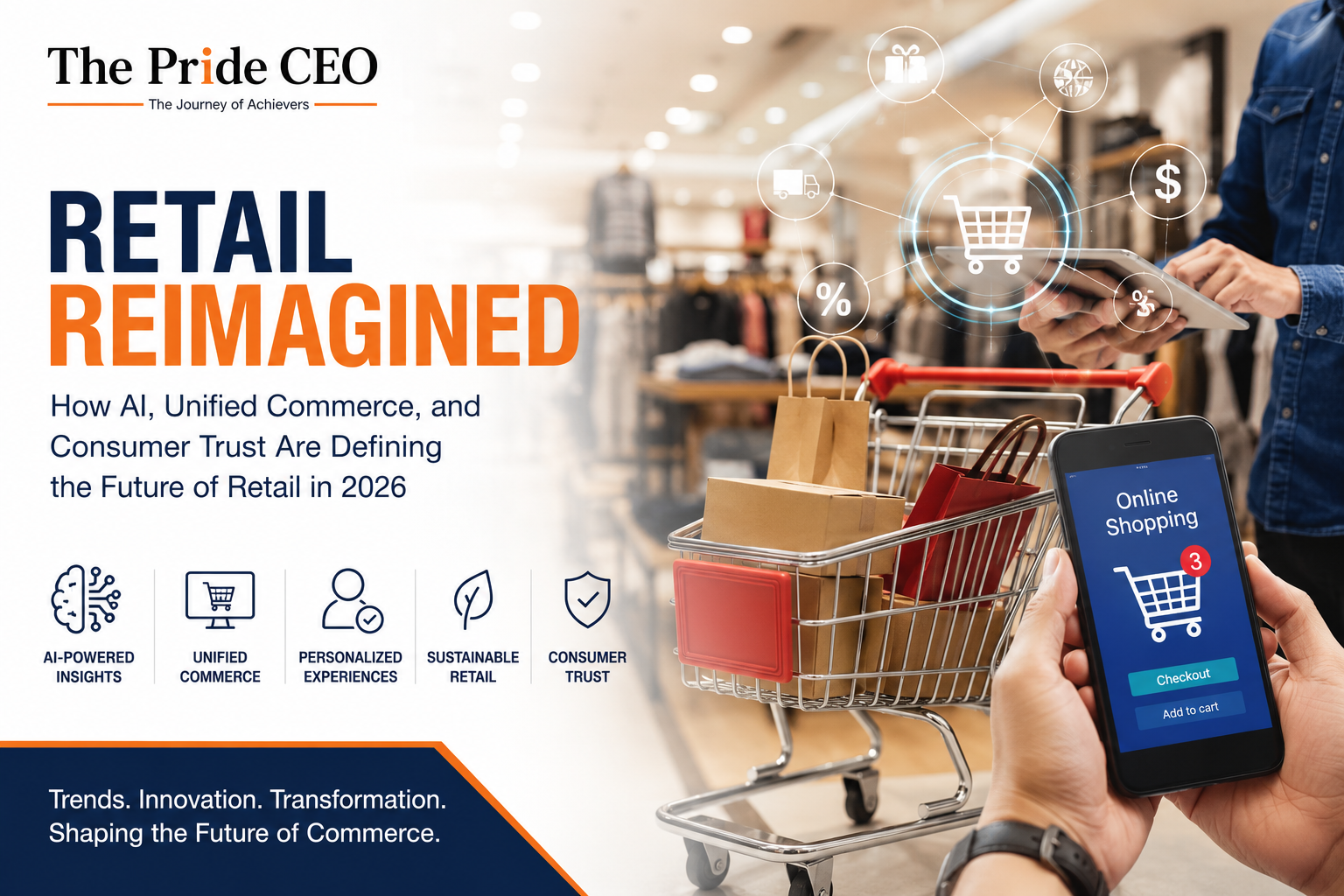
The retail industry has always evolved alongside changing consumer behavior. From traditional storefronts to e-commerce and mobile shopping, every decade has introduced a new transformation. In 2026, however, retail is experiencing its most significant shift yet—one driven not only by technology but by intelligence, sustainability, and customer trust.
Today’s consumers expect more than competitive pricing. They demand seamless shopping experiences, personalized recommendations, faster deliveries, transparent business practices, and brands that align with their values. Retailers that successfully combine digital innovation with human-centric experiences are emerging as the clear market leaders.
The Rise of Intelligent Retail
Artificial Intelligence has moved beyond being a customer service tool. It has become the operational backbone of modern retail.
Leading retailers now leverage AI to:
- Predict customer demand with remarkable accuracy
- Optimize inventory before shortages occur
- Deliver hyper-personalized shopping experiences
- Automate pricing strategies
- Improve warehouse and supply chain efficiency
- Enhance fraud detection and payment security
Rather than replacing employees, AI is increasingly empowering retail teams by eliminating repetitive tasks and allowing staff to focus on customer engagement and strategic decision-making. Industry analysts increasingly view AI as a fundamental redesign of retail business models rather than simply another technology layer.
Unified Commerce Becomes the New Standard
The distinction between online and offline shopping continues to disappear.
Consumers expect to:
- Browse products on mobile
- Purchase online
- Pick up in-store
- Return through any channel
- Receive consistent pricing everywhere
- Maintain one loyalty profile across platforms
This “Unified Commerce” approach has become essential for customer satisfaction.
Retailers operating disconnected systems often struggle with inventory inaccuracies, delayed deliveries, inconsistent pricing, and fragmented customer experiences. Modern retail leaders are investing heavily in integrated commerce platforms that synchronize customer, product, and inventory data across every touchpoint.
Personalization Has Become an Expectation
Consumers no longer view personalization as a premium feature—it is an expectation.
Retailers now analyze shopping patterns, browsing history, purchase behavior, location, and seasonal preferences to create individualized experiences that feel relevant without becoming intrusive.
Personalization now extends across:
- Product recommendations
- Dynamic promotions
- Email marketing
- Loyalty rewards
- Digital storefronts
- In-store experiences
However, personalization succeeds only when supported by transparency and responsible data usage. Customers increasingly reward brands that respect privacy while delivering value.
Sustainability Drives Purchasing Decisions
Environmental responsibility has become a competitive advantage rather than merely a compliance requirement.
Modern consumers actively evaluate brands based on:
- Ethical sourcing
- Sustainable packaging
- Carbon footprint reduction
- Circular retail initiatives
- Product recycling programs
- Supply chain transparency
Retailers investing in greener operations often benefit from stronger customer loyalty, improved operational efficiency, and enhanced brand reputation.
Sustainability is increasingly viewed as both an environmental responsibility and a long-term business strategy that supports profitability.
Physical Stores Are Being Reinvented
Despite the continued growth of e-commerce, physical retail remains indispensable.
Today’s stores are evolving into experience centers where customers can:
- Interact with products
- Receive expert consultation
- Participate in brand experiences
- Access exclusive services
- Enjoy faster fulfillment options
Smart stores now incorporate technologies such as:
- AI-assisted customer service
- Smart shelves
- Digital price displays
- Computer vision analytics
- Self-checkout systems
- Interactive digital displays
The objective is not simply automation but creating frictionless shopping journeys while preserving meaningful human interactions.
Supply Chains Become Strategic Assets
Recent global disruptions have demonstrated that supply chain resilience is no longer optional.
Retail organizations are investing in:
- Predictive demand forecasting
- Regional sourcing
- Real-time logistics visibility
- Warehouse automation
- Inventory optimization
- Risk monitoring systems
Rather than reacting to disruptions, modern retailers increasingly rely on predictive intelligence to identify risks before they impact operations.
Retail Media Creates New Revenue Streams
Retail companies are increasingly transforming customer data into advertising opportunities through Retail Media Networks.
Brands now collaborate directly with retailers to deliver highly targeted promotions across:
- Retail websites
- Mobile applications
- Digital signage
- Loyalty platforms
- Marketplace ecosystems
This emerging business model enables retailers to diversify revenue while offering suppliers more measurable marketing performance.
Trust Is the Ultimate Competitive Advantage
As AI adoption accelerates, consumers are becoming more aware of how their data is collected and used.
Successful retailers are differentiating themselves through:
- Transparent AI practices
- Responsible personalization
- Strong cybersecurity
- Ethical data governance
- Inclusive customer experiences
Trust has become one of retail’s most valuable assets, influencing purchasing decisions as strongly as pricing or convenience.
Leadership Lessons for Retail Executives
Retail success in 2026 depends less on adopting isolated technologies and more on creating intelligent, connected ecosystems.
Forward-thinking retail leaders are focusing on:
- Enterprise-wide AI integration
- Unified commerce platforms
- Customer-centric innovation
- Sustainable operations
- Workforce upskilling
- Responsible data governance
Technology alone no longer creates competitive advantage. The organizations that combine innovation with trust, agility, and exceptional customer experiences will shape the next generation of global retail.
Conclusion
Retail is entering a new era where every customer interaction, operational decision, and technological investment contributes to a unified experience. Artificial Intelligence, predictive analytics, sustainable business practices, and omnichannel commerce are no longer future concepts—they are today’s competitive necessities.
The retailers that thrive over the next decade will not simply sell products. They will build intelligent ecosystems that anticipate customer needs, create memorable experiences, and foster lasting relationships built on transparency and trust.
As the retail landscape continues to evolve, one principle remains constant: businesses that innovate with purpose and place customers at the center of every decision will lead the future of commerce.