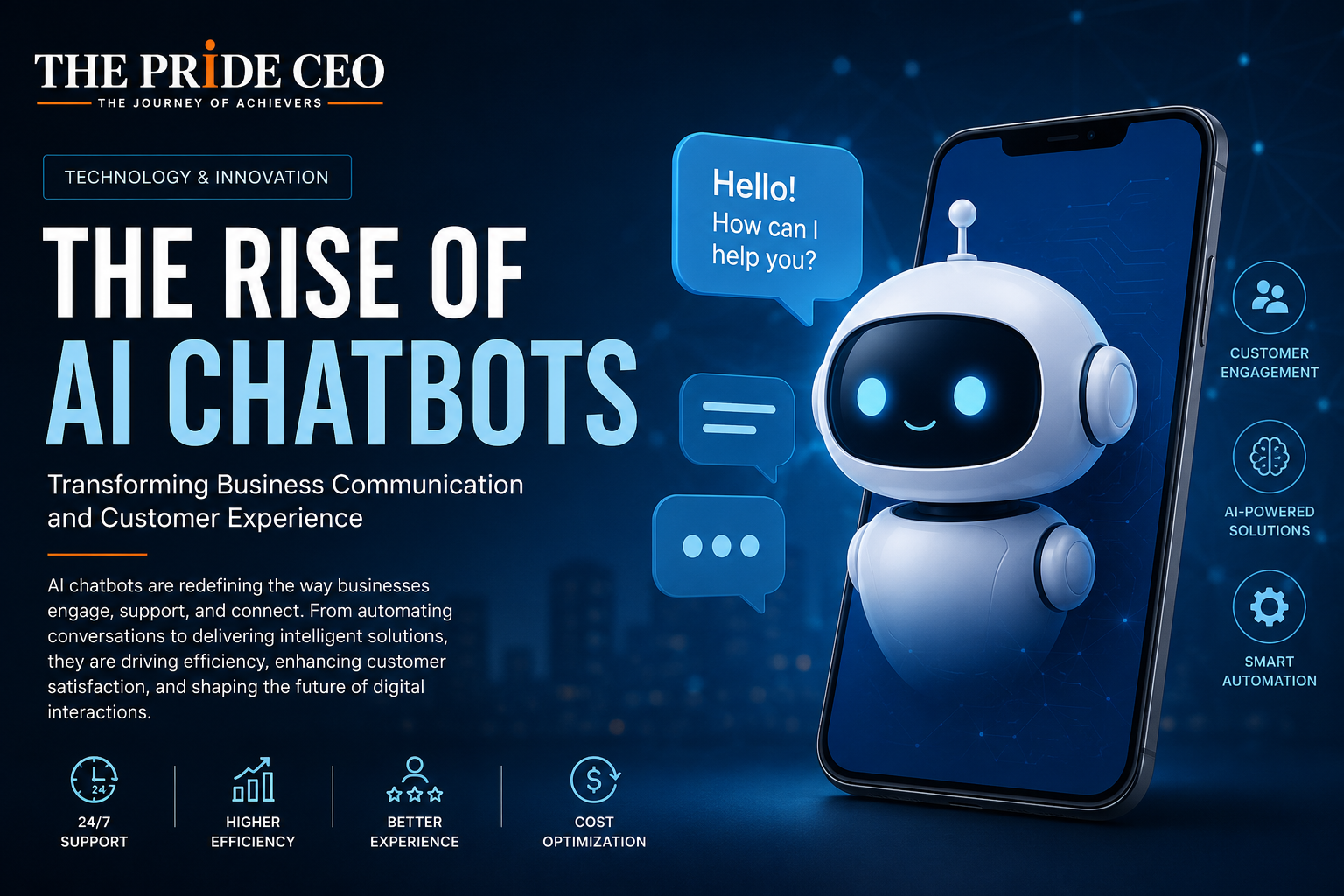
Artificial Intelligence has evolved from being a futuristic concept to an essential business technology. Among its most impactful innovations, AI-powered chatbots have emerged as one of the fastest-growing solutions, helping organizations redefine customer engagement, automate operations, and enhance productivity.
Today’s chatbots are no longer limited to answering predefined questions. Powered by advanced Natural Language Processing (NLP), Machine Learning, and Generative AI, they can understand context, deliver personalized responses, and even assist in complex business processes. Modern conversational AI is transforming how companies interact with customers, employees, and partners across industries.
Beyond Customer Support
Businesses initially adopted chatbots to handle customer service inquiries and reduce response times. However, their role has expanded significantly.
Today’s AI chatbots are capable of:
- Providing 24/7 customer assistance
- Generating qualified sales leads
- Assisting with employee onboarding
- Scheduling appointments
- Automating HR and IT support
- Recommending products and services
- Processing customer feedback
- Supporting multilingual communication
Organizations across banking, healthcare, retail, manufacturing, education, and logistics are integrating conversational AI into their digital transformation strategies to improve efficiency while reducing operational costs.
The Business Value of AI Chatbots
Enhanced Customer Experience
Modern consumers expect instant responses. AI chatbots provide immediate assistance around the clock, significantly reducing wait times while delivering consistent service quality. Customers receive faster resolutions, leading to higher satisfaction and stronger brand loyalty.
Increased Operational Efficiency
Routine inquiries often consume valuable employee time. Chatbots automate repetitive tasks, allowing human teams to focus on strategic decision-making, relationship building, and complex problem-solving.
Better Lead Generation
AI-powered conversational assistants engage website visitors proactively, qualify prospects, answer product questions, and guide potential customers through the buying journey. This creates a seamless sales experience while improving conversion rates.
Cost Optimization
By automating thousands of conversations simultaneously, businesses can scale customer support without proportionally increasing staffing costs. This makes AI particularly valuable for fast-growing startups and global enterprises alike.
Industry Applications
Healthcare
Hospitals and healthcare providers use AI chatbots to schedule appointments, answer patient queries, provide medication reminders, and streamline administrative workflows.
Banking and Financial Services
Financial institutions deploy conversational AI for balance inquiries, fraud alerts, loan information, transaction assistance, and customer onboarding while maintaining secure authentication processes.
Retail and E-commerce
Retailers leverage chatbots to recommend products, track orders, process returns, recover abandoned carts, and deliver personalized shopping experiences.
Human Resources
Organizations increasingly rely on AI assistants to answer employee questions, automate recruitment screening, manage leave requests, and support internal knowledge management.
Generative AI: The Next Evolution
The introduction of Generative AI has fundamentally changed chatbot capabilities.
Unlike traditional rule-based bots that rely on predefined scripts, modern AI assistants understand context, generate natural conversations, summarize documents, draft emails, analyze data, and even assist with strategic decision-making.
Large Language Models (LLMs) have enabled businesses to move beyond automation toward intelligent collaboration between humans and AI.
Challenges Organizations Must Address
Despite their advantages, AI chatbots are not without limitations.
Organizations should carefully consider:
- Data privacy and regulatory compliance
- AI hallucinations and inaccurate responses
- Cybersecurity risks
- Ethical AI governance
- Human oversight for sensitive decisions
Successful AI implementation requires continuous monitoring, transparent policies, and responsible deployment to ensure trust and reliability.
Looking Ahead
The future of AI chatbots extends far beyond customer support.
Emerging capabilities include voice-enabled assistants, autonomous AI agents, multimodal interactions, predictive analytics, and deeper integration with enterprise systems. As these technologies mature, businesses will increasingly rely on conversational AI as a core component of digital operations rather than a standalone support tool.
Final Thoughts
AI chatbots are no longer optional innovations—they have become strategic business assets. Organizations that embrace conversational AI responsibly can improve customer experiences, enhance operational efficiency, and unlock new opportunities for growth.
The competitive advantage will not belong simply to companies using AI, but to those that combine intelligent automation with human expertise, creating meaningful experiences that drive long-term value.
As businesses continue their digital transformation journeys, AI chatbots will remain at the forefront of innovation, shaping the future of communication, service delivery, and enterprise productivity.